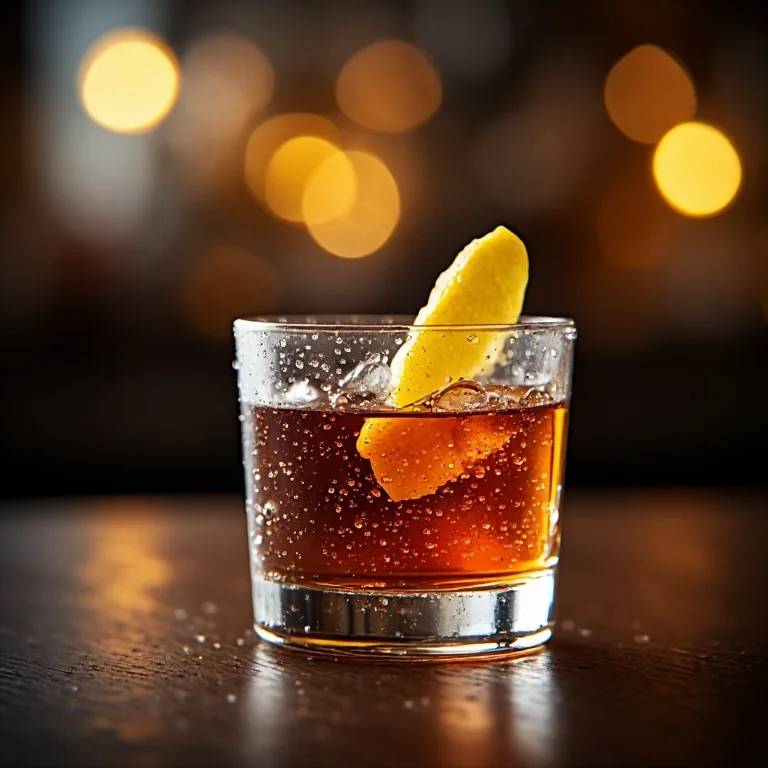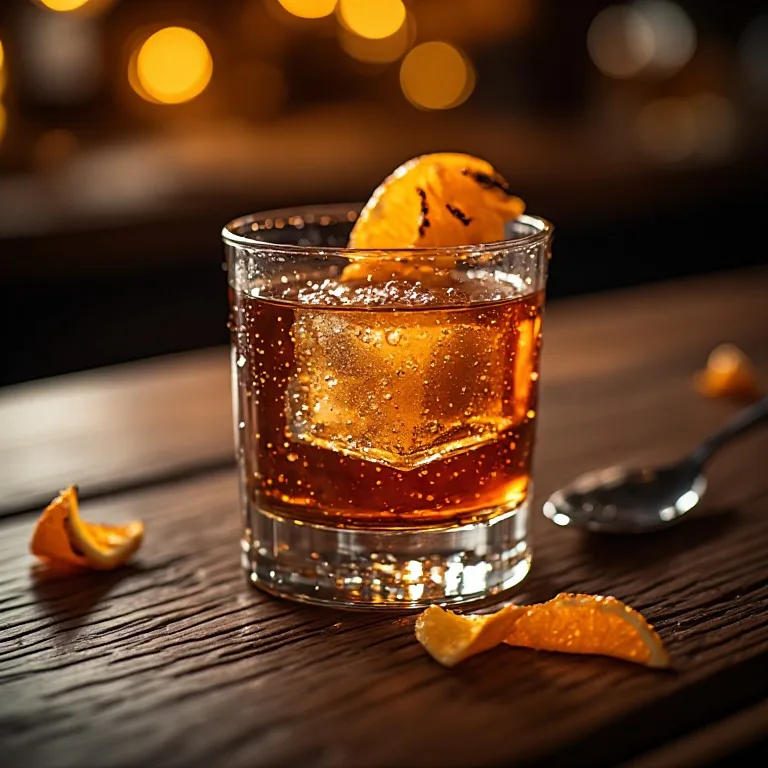
The Hotel Monteleone has been on Royal Street in the French Quarter since 1886, run by the same family for generations. Its lobby bar, the Carousel Bar, turns slowly under a painted carousel canopy, and the drink most people order there is the Vieux Carré. It’s one of New Orleans’ great classic cocktails, and it’s older than the bar where it’s now served.
Where the Vieux Carré Came From
The drink is credited to Walter Bergeron, the Monteleone’s head bartender in the 1930s. Its first known printing is in Stanley Clisby Arthur’s Famous New Orleans Drinks and How to Mix ‘Em, published in 1937, which named Bergeron as its creator. The hotel usually says 1938; the book suggests it was slightly earlier.
The name is the French Quarter’s original name — ‘old square’ in French — and the drink was designed to reflect the city: American rye, French cognac and Bénédictine, Italian vermouth and New Orleans’ own Peychaud’s bitters.
The Carousel Bar opened in 1949, more than a decade after the drink. That’s why you’ll sometimes read that the Vieux Carré was ‘invented at the Carousel Bar.’ It wasn’t, but the Carousel Bar is where the Monteleone serves it now.
What It Tastes Like
The Vieux Carré is like a richer, rounder Manhattan. The rye brings spice, the cognac adds dried fruit and smoothness, and the sweet vermouth adds body and a little bitterness. The Bénédictine — a French herbal liqueur sweetened with honey — and the two bitters add layers of spice and herbs. It’s strong, smooth and complex.
Why Copycats Miss
- Cheap or old vermouth. Vermouth is a third of the drink. A stale bottle that’s been open on the shelf for months makes the drink taste flat and sour. Use a good one, and keep it in the fridge.
- Skipping Peychaud’s. The drink needs both bitters. Angostura brings warm spice; Peychaud’s brings anise and fruit.
- Too much Bénédictine. It’s very sweet and very herbal. Arthur’s 1937 recipe calls for half a teaspoon; most bars now use a barspoon. More than that and it takes over.
- Shaking. All-spirit drinks should be stirred to keep them clear and smooth.
The Key Technique: Stirring and Dilution
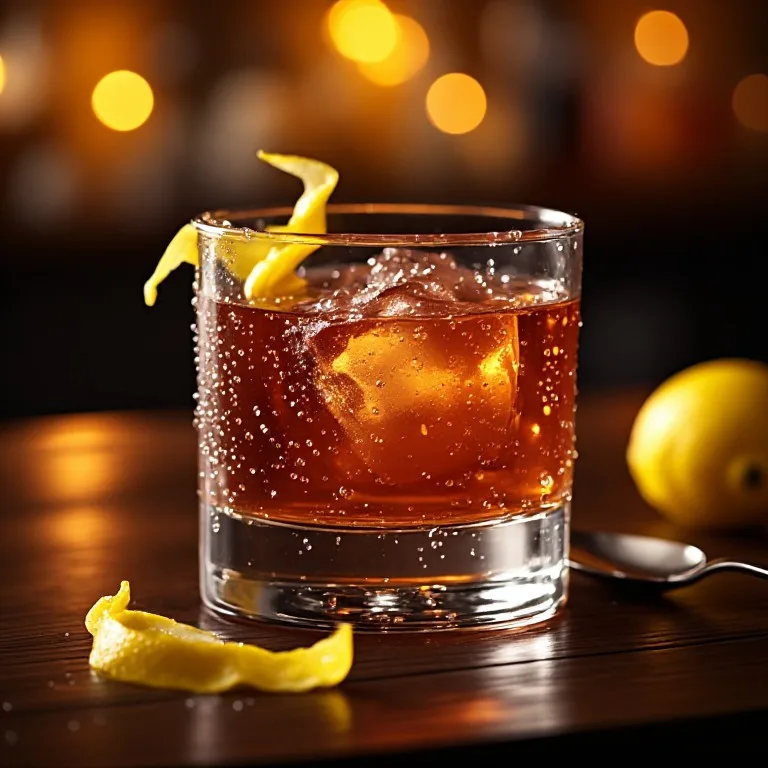
Because the drink is all spirits and vermouth, the only water it gets is from the ice. Stir for about 30 seconds — longer than most people do — until the mixing glass is frosty. That dilution softens the alcohol and lets the flavors come through. Then strain over a large cube, which melts slowly.
Batching for a Party
The Vieux Carré is a great batch cocktail. Mix the ingredients with water to replace stirring dilution, bottle it, and refrigerate (not freeze, since vermouth can become cloudy at very low temperatures). Pour over ice and add a lemon twist to each glass.
The Mocktail: Royal Street
Rebuilding three spirits plus Bénédictine takes a few pieces. A zero-proof whiskey alternative supplies the base, a non-alcoholic aperitivo stands in for the vermouth’s bitter-sweet notes, and honey syrup with a pinch of dried thyme suggests Bénédictine. A teaspoon of tart cherry juice adds the fruit that cognac and Peychaud’s normally give. Double-strain to catch the thyme.
Choosing the Bottles
Rye: A spicy rye of 90–100 proof keeps the drink lively. Rittenhouse, Sazerac Rye, Old Overholt Bonded and Wild Turkey Rye are good choices.
Cognac: A VS or VSOP from a reliable house (Pierre Ferrand 1840, H by Hine, Rémy Martin VSOP) adds dried fruit and smoothness. It doesn’t need to be expensive; very old cognacs get lost in this drink.
Vermouth: Carpano Antica Formula is rich and vanilla-heavy, Cocchi di Torino is balanced and spicy, and Martini Rosso is lighter. Any of these works.
Enjoy responsibly — must be 21+.